Congressi

Archivio poster e materiali di partecipazioni a congressi

Site 2023

Thermal performance of the purple sea urchin Paracentrotus lividus (lamarck, 1816)

Antonio Giacoletti

Climate change generates side-effects with direct and indirect ecological repercussions that are often difficult to predict. Among main ecological side-effects at local level,…
Read more

Site 2023

Thermal performance of the purple sea urchin Paracentrotus lividus (lamarck, 1816)

Antonio Giacoletti

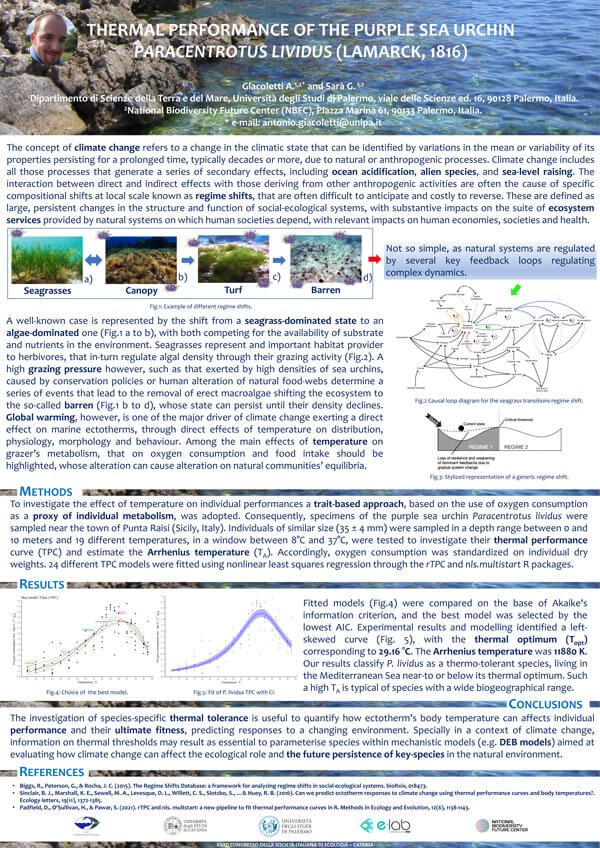
Climate change generates side-effects with direct and indirect ecological repercussions that are often difficult to predict. Among main ecological side-effects at local level, community compositional shift is one among the most difficult to predict. An example is the case of the shift from a seagrass-dominated to an algae-dominated state where multiple effects due to climate and local biotic interaction factors such as grazing due to the sea urchin’s action usually drive the transition from high- to low complexity habitats. While this kind of shift is well-investigated in the Mediterranean Sea, mechanisms driving it are less known as those driven by functional traits dealing with the species-specific thermal performances. Temperature indeed drives all activities at individual level including the strong link between metabolism and feeding (grazing) rates. Thus, investigating the species-specific thermal window of grazers involved in the ecosystem shifts illustrate the role of temperature in ecological processes, increasing our ability to predict ecosystem shifts under current increasing temperature. Here, thermal tolerance of purple sea urchin Paracentrotus lividus was investigated and specimens of P. lividus were sampled from Sicilian subtidal sites and 19 different temperatures, between 8°C and 37°C, were tested, using respiration rates as a proxy of individual metabolism. P. lividus showed a left-skewed curve, with a Topt at 29°C, classifying P. lividus as a thermo-tolerant species, by now living in the Mediterranean Sea very often near-to or over the measured thermal optimum. Such a basal functional information may result crucial when assessing and predicting the role of grazers in reversing the ecosystem state as provides the extent of the thermal field of action of grazers under the current increasing temperature of water masses in the Mediterranean Sea.

Download

Site 2024

Relationship between associated biodiversity and ecosystem functioning in Cymodocea nodosa seagrass in a costal lagoon system (the Stagnone di Marsala, Western Sicily)

Ana Botero

Biodiversity plays a crucial role in maintaining ecosystem functioning and ensuring the provision of ecosystem services that support human well-being, since the potential…
Read more

Site 2024

Relationship between associated biodiversity and ecosystem functioning in Cymodocea nodosa seagrass in a costal lagoon system (the Stagnone di Marsala, Western Sicily)

Ana Botero

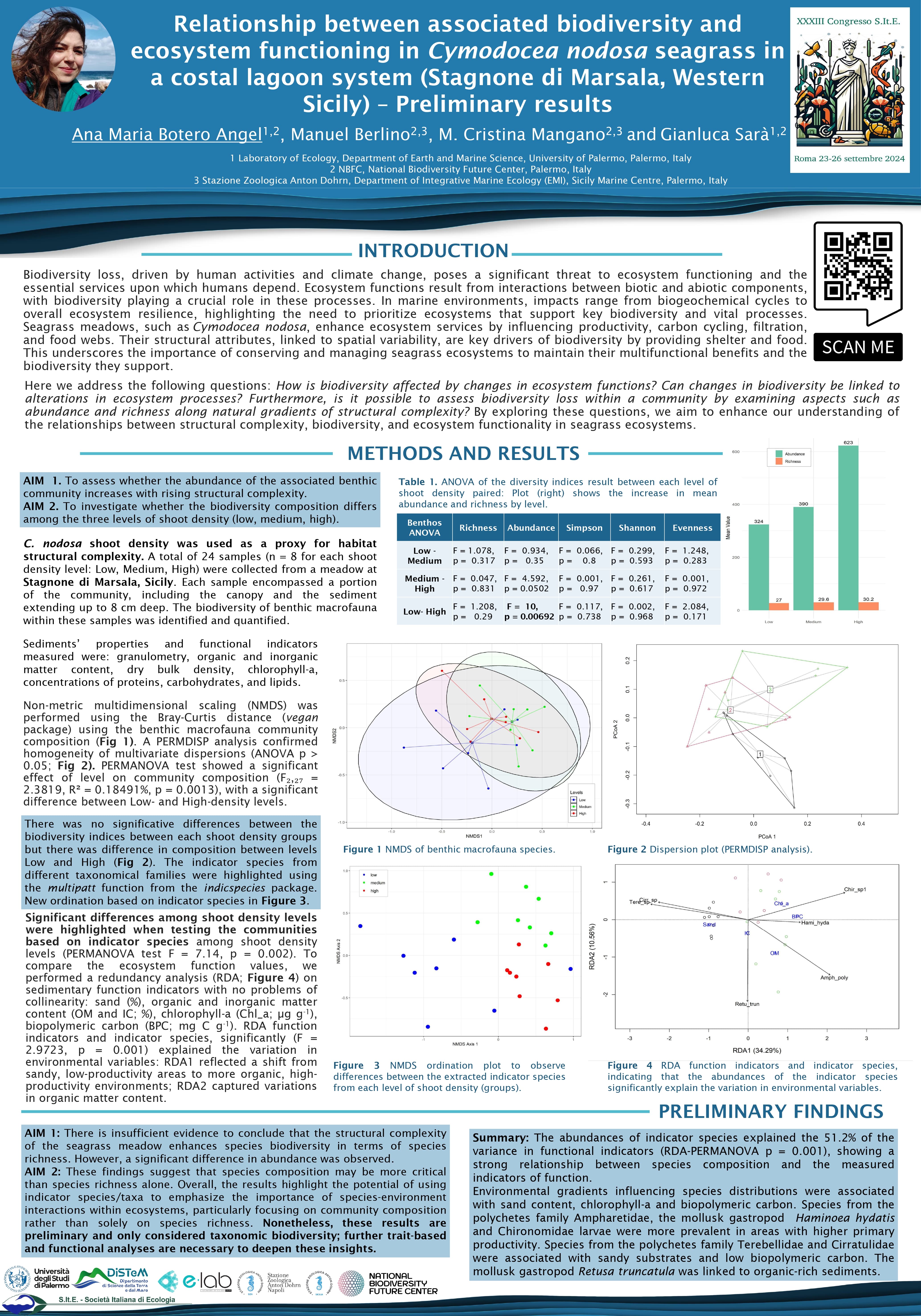
Biodiversity plays a crucial role in maintaining ecosystem functioning and ensuring the provision of ecosystem services that support human well-being, since the potential ecosystem functions in an ecosystem are a function of the diversity within it. In the marine environment, diverse species in different measure contribute to essential processes such as primary production, nutrient cycling, carbon sequestration and others, due their traits and main ecological attributes. However, biodiversity is increasingly threatened by anthropogenic stressors and climate change, leading to significant alterations in species composition and ecosystem dynamics. Seagrass meadows play a crucial role in coastal ecosystems, they enhance biodiversity in the areas where they are present by influencing the productivity, carbon cycling, filtration, food webs and other functions that make them great source of ecosystem services. The capacity of the seagrass to provide shelter and food is related to its architecture, which apart from being a direct measure of the state of the meadow, drives the secondary production, affecting the consumption and predation of organisms associated and, therefore, shaping its associated biodiversity. Seagrass structural complexity is then strictly connected with most of the ecological interactions, the structure of the community and the number of functions expressed by the underlying community. Here we present the results of our research where biodiversity is studied in a gradient of habitat structural complexity (shoot density; based on the hypothesis in which: higher complexity = higher biodiversity) to investigate its relationship to some indicators of ecosystem functions such as habitat provision, sediment stabilization and carbon sequestration. These results represent an important step in understanding the underlying mechanisms that drive ecosystem functioning, which then can be used to inform decisionmakers about the relevance of biodiversity when prioritizing conservation actions.

Download

Site 2024

Evidence of chronic trawling disturbance on bentho-demersal communities: insights from taxonomic and functional diversity

Gabriele Di Bona

Trawling on continental shelves disrupts benthic communities by altering sediments and increasing species mortality, favoring opportunistic over ecologically crucial long-lived…
Read more

Site 2024

Evidence of chronic trawling disturbance on bentho-demersal communities: insights from taxonomic and functional diversity

Gabriele Di Bona

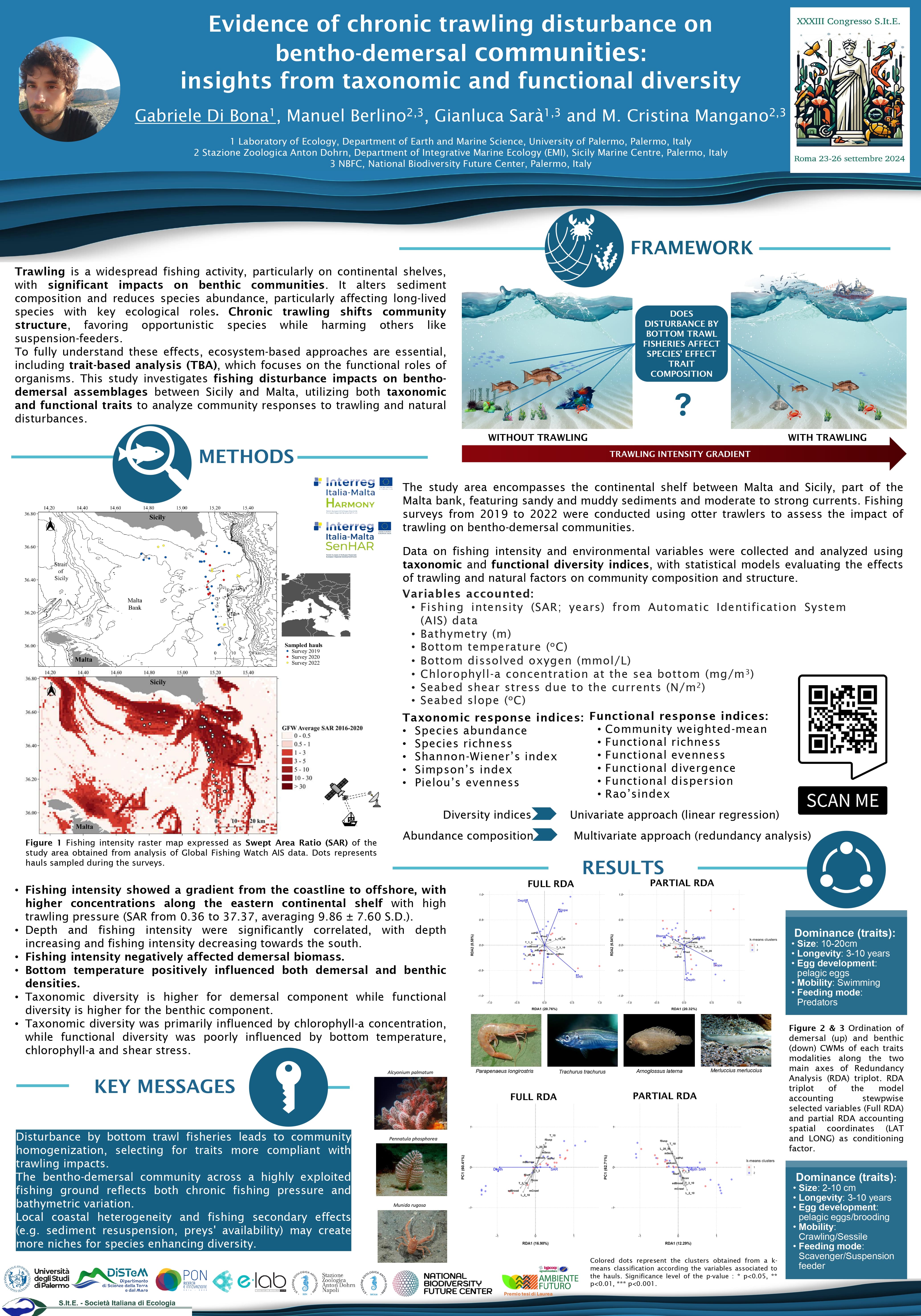
Trawling on continental shelves disrupts benthic communities by altering sediments and increasing species mortality, favoring opportunistic over ecologically crucial long-lived species. An ecosystem-based approach, particularly trait-based analysis, is essential for understanding trawling's broader impacts on community functioning, especially in areas like the Mediterranean's Strait of Sicily, where extensive trawling necessitates multi-year management plans to prevent overexploitation. The study focused on an area between Malta and Sicily, known for significant trawling on sand and muddy sediments. Fishing intensity, assessed using satellite data, showed a gradient from coastline to offshore, peaking along the eastern continental shelf margin. Swept area ratio values ranged from 0.36 to 37.37, indicating substantial trawling pressure. Depth increased while fishing intensity decreased towards lower latitudes. During experimental trawl surveys, 8,191 individuals from 103 species were collected, with demersal species comprising 70%. Multivariate analysis assessed the impact of fishing intensity and environmental predictors on species and trait composition, revealing demersal species densities negatively affected by fishing intensity but positively correlated with bottom temperature. Benthic species densities showed weak negative impacts from fishing intensity but positive associations with temperature and chlorophyll concentration. Taxonomic diversity remained unaffected by fishing intensity, though chlorophyll concentration negatively affected demersal indices while enhancing benthic richness and diversity. Functional diversity indices showed no significant variation due to fishing intensity. Multivariate analysis indicated that spatial coordinates and studied variables explained only a small portion of taxonomic and functional composition variance. The study found minimal differences in bento-demersal assemblage composition along the observed fishing intensity gradient across the eastern Strait of Sicily's continental shelf. The assemblage composition appears influenced by chronic bottom trawling and bathymetric factors. These findings underscore the complexity of managing trawling impacts in ecologically sensitive marine environments.

Download

Site 2024

Enhancing ecosystem function assessment through cost-effective Tea Bag decomposition studies in marine habitats

Manuel Berlino

Climate changes are increasingly affecting marine ecosystem having general negative effect on their functioning, stability and potentially their resilience against multiple…
Read more

Site 2024

Enhancing ecosystem function assessment through cost-effective Tea Bag decomposition studies in marine habitats

Manuel Berlino

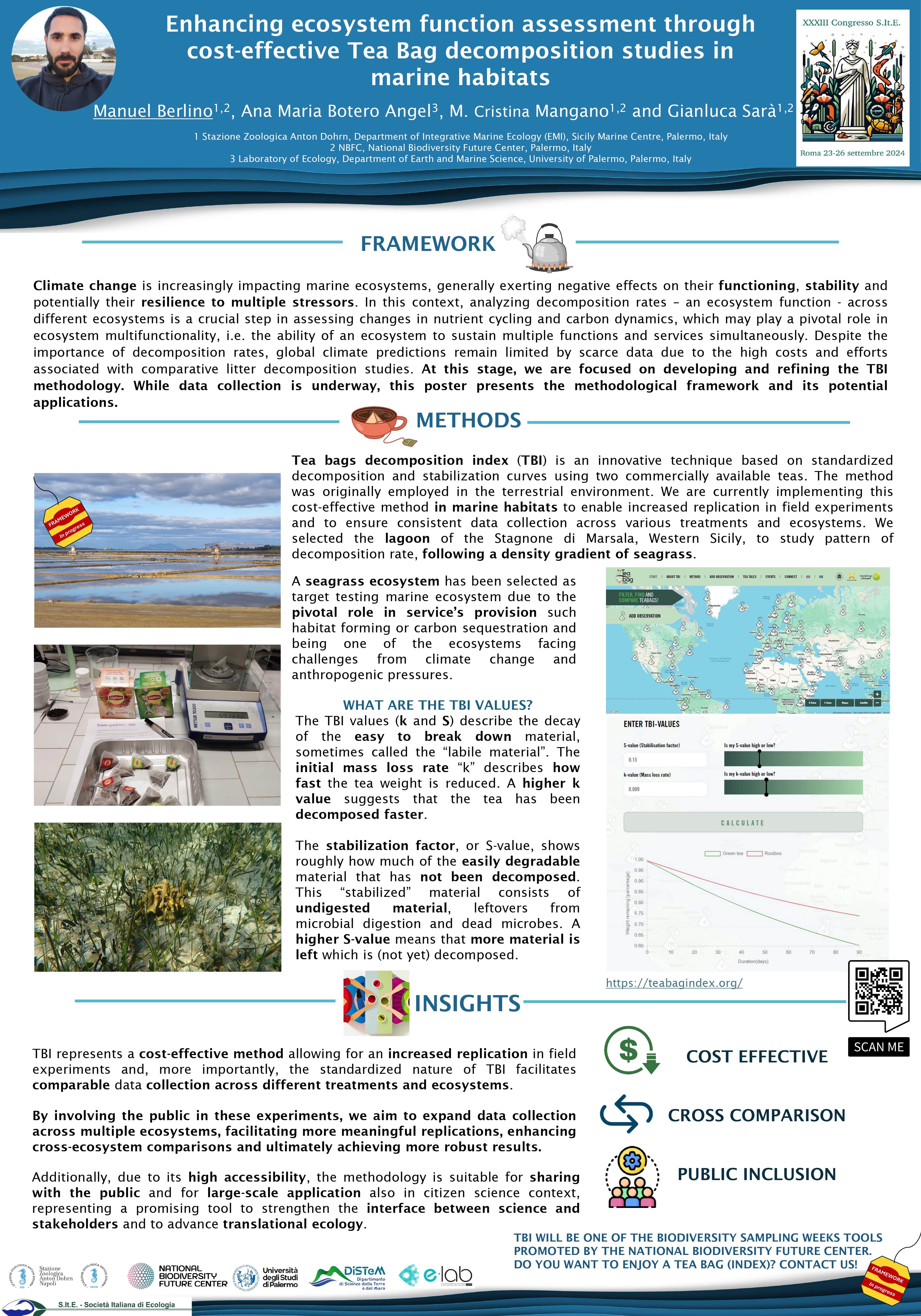
Climate changes are increasingly affecting marine ecosystem having general negative effect on their functioning, stability and potentially their resilience against multiple stressors. In this context, analysing decomposition rate in different ecosystems represent an important step to be studied to assess changes in nutrient cycling and carbon dynamic that may play a crucial role on ecosystem multifunctionality i.e. referring to the ability of an ecosystem to sustain multiple function and services simultaneously. Despite the importance of decomposition rate, global climate predictions continue to be hindered by limited data due to the high costs and efforts associated with comparative litter decomposition studies. Here we took advantage of the tea bags decomposition index (TBI) to study pattern of decomposition rate in a lagoon of the Stagnone di Marsala, Western Sicily, by deploying tea bags following a density gradient of seagrass. A seagrass ecosystem has been selected as target testing marine ecosystem as pivotal in services such habitat forming or carbon sequestration and being of the ecosystems facing challenges from climate change and anthropogenic pressures. TBI represents an innovative and cost-effective techniques based on a well standardized curve of decomposition and stabilization rate of two commercially available teas. This represents a cost-effective method allowing for an increased replication in field experiments and, more importantly, the standardized nature of TBI facilitates comparable data collection across different ecosystems. Additionally, due to its high accessibility, the methodology is suitable for sharing with the public and for large-scale application also in citizen science context. Involving the public in this kind of experiments could lead to an increase in data across multiple ecosystems, allowing for more useful replications to enhance comparisons between different ecosystems and achieve more robust results. In this context, TBI represent a salient tool to strength the science-stakeholders interface and facilitate the translational ecology.

Download

Site 2024

Global biotic interactions of seagrasses: a systematic review of epibiont and epiphyte relationships.

Nicoletta Marsiglia

Biological interactions are one of the main factors influencing the distribution and abundance of species worldwide. Seagrasses represent important shallow-water habitats all…
Read more

Site 2024

Global biotic interactions of seagrasses: a systematic review of epibiont and epiphyte relationships.

Nicoletta Marsiglia

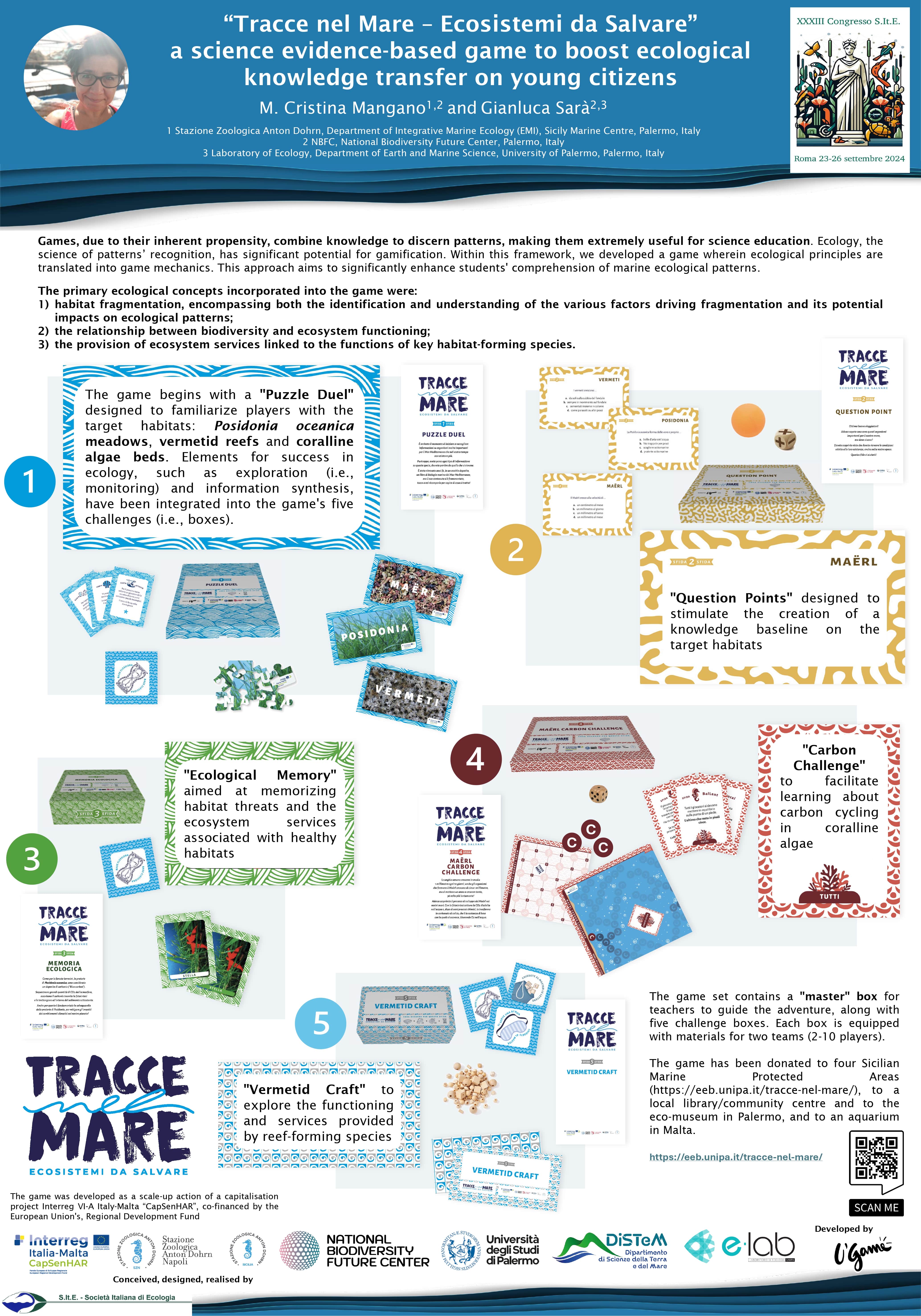
Biological interactions are one of the main factors influencing the distribution and abundance of species worldwide. Seagrasses represent important shallow-water habitats all around the world and provide crucial ecosystem goods and services to humans. Thanks to their structural complexity, they support heterogeneous populations and interact with associated benthic invertebrates (e.g., sea anemones, isopods, gastropods) and fish populations, with which they establish complex relationships that influence the performance and fitness of the involved organisms. Here, a systematic review was performed to investigate the existing potential biotic interactions between seagrasses and epibionts-epiphytes on a global scale. A complex search string was created and ran in the online databases Scopus and WoS, yielding a total of 43 final outcomes in a temporal range between 1987 and 2024. Results showed pro and cons of different types of biotic interactions (mainly symbiosis, including mutualism and commensalism) among these habitat formers and the associated epibionts and epiphytes. The review revealed that the most studied interactions referred to Posidonia oceanica (Delile) L. and Zostera marina L. providing refuge and habitat to different epiphytes and epibionts. Reviewed studies also highlighted the importance of epiphytes, their potential role in the growth, nutrient dynamics and their implications in the light absorption for seagrasses. Also, epibionts such as sea anemones may chemically defended seagrasses from predation, therefore their mucous can coat seagrass leaves and obstruct sunlight absorption. Understanding the various types of biotic interactions and studying how they can influence the performance of the species involved is of vital importance in the current and future context of climate change.

Download

Site 2024

“Tracce nel Mare – Ecosistemi da Salvare” a science evidence-based game to boost ecological knowledge transfer on young citizens

Maria Cristina Mangano

Games, due to their inherent propensity, combine knowledge to discern patterns, making them extremely useful for science education. Ecology, the science of patterns’ recognition,…
Read more

Site 2024

“Tracce nel Mare – Ecosistemi da Salvare” a science evidence-based game to boost ecological knowledge transfer on young citizens

Maria Cristina Mangano

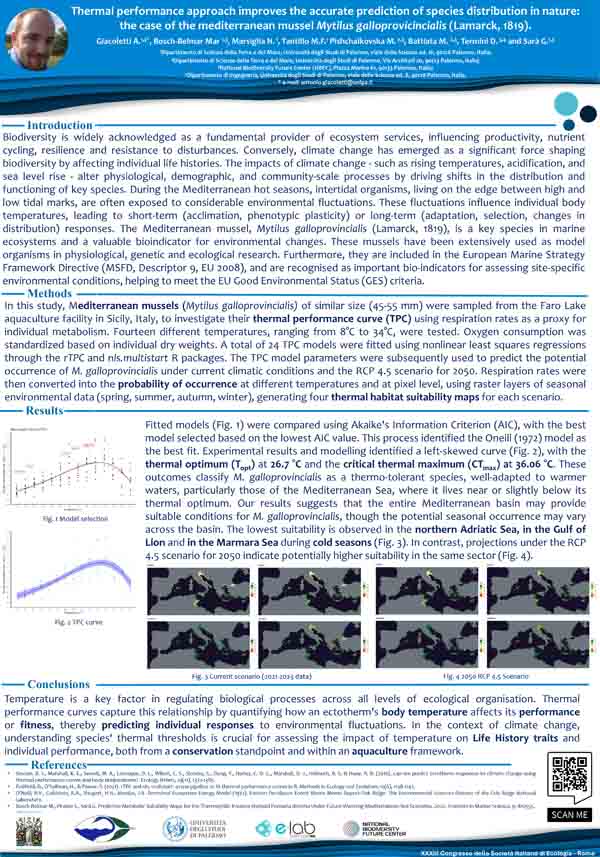
Games, due to their inherent propensity, combine knowledge to discern patterns, making them extremely useful for science education. Ecology, the science of patterns’ recognition, has significant potential for gamification. Within this framework, we developed the game "Tracce nel Mare – Ecosistemi da Salvare" wherein ecological principles are translated into game mechanics. This approach aims to significantly enhance students' comprehension of marine ecological patterns. The primary ecological concepts incorporated into the game were: 1) habitat fragmentation, encompassing both the identification and understanding of the various factors driving fragmentation and its potential impacts on ecological patterns; 2) the relationship between biodiversity and ecosystem functioning; 3) the provision of ecosystem services linked to the functions of key habitat-forming species. The game begins with a "Puzzle Duel," designed to familiarize players with the target habitats: Posidonia oceanica meadows, vermetid reefs and coralline algae beds. Elements for success in ecology, such as exploration (i.e., monitoring) and information synthesis, have been integrated into the game's five challenges (i.e., boxes). These include: "Question Points", designed to stimulate the creation of a knowledge baseline on the target habitats; "Ecological Memory", aimed at memorizing habitat threats and the ecosystem services associated with healthy habitats; "Carbon Challenge", to facilitate learning about carbon cycling in coralline algae; "Vermetid Craft", to explore the functioning and services provided by reef-forming species. The game set contains a "master" box for teachers to guide the adventure, along with five challenge boxes. Each box is equipped with materials for two teams (2-10 players). The game has been donated to four Sicilian Marine Protected Areas (https://eeb.unipa.it/tracce-nel-mare/), to a local library/community centre and to the eco-museum in Palermo, and to an aquarium in Malta. The game was developed as a scale-up action of a capitalisation project Interreg VI-A Italy-Malta “CapSenHAR”, co-financed by the European Union's, Regional Development Fund.

Download

Site 2024

Thermal performance approach improves the accurate prediction of species distribution in nature: the case of the Mediterranean mussel Mytilus galloprovicincialis (Lamarck, 1819)

Antonio Giacoletti

Biodiversity is widely acknowledged as a fundamental provider of ecosystem services, influencing productivity, nutrient cycling, resilience and resistance to disturbances.…
Read more

Site 2024

Thermal performance approach improves the accurate prediction of species distribution in nature: the case of the Mediterranean mussel Mytilus galloprovicincialis (Lamarck, 1819)

Antonio Giacoletti

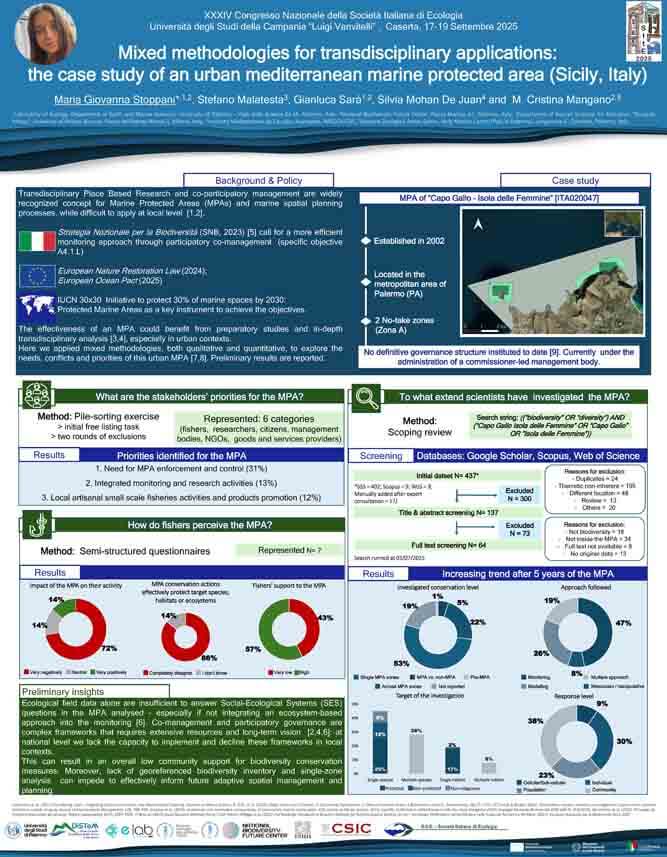
Biodiversity is widely acknowledged as a fundamental provider of ecosystem services, influencing productivity, nutrient cycling, resilience and resistance to disturbances. Conversely, climate change has emerged as a significant force shaping biodiversity by affecting individual life histories. The impacts of climate change, such as rising temperatures, acidification, and sea level rise, drive physiological, demographic, and community-scale processes by causing shifts in the distribution and functioning of key species. During the Mediterranean hot seasons, intertidal organisms living on the edge between high and low tidal marks, are often subjected to significant environmental fluctuations. These fluctuations affect individual body temperatures, leading to short term (acclimation, phenotypic plasticity) or long term (adaptation, selection, changes in distribution) responses. The Mediterranean mussel, Mytilus galloprovincialis (Lamarck, 1819), represents a key and valuable species in marine ecosystems and an important bioindicator for environmental changes. These mussels have been extensively used as model organisms for physiological, genetic and ecological studies. They are included in the European Marine Strategy Framework Directive (MSFD, Descriptor 9, EU 2008), and are recognised as useful site-specific bio-indicators to meet the EU Good Environmental Status (GES). In this study, individual performances were investigated in terms of specific thermal tolerance to frame the effect of temperature on metabolic machinery functioning. Once sampled, M. galloprovincialis specimens were subjected to 14 different temperatures, ranging from 8°C to 34°C, with respiration rates measured as a proxy for metabolism. The results revealed a left-skewed curve, with a Topt at 26.7 °C, classifying M. galloprovincialis as a thermo-tolerant species well-adapted to warmer waters. This may explain its global expanding range in response to rising temperatures. Understanding the thermal tolerance mechanisms of this species is essential for predicting the impact of climate change on marine biodiversity and for developing conservation strategies.

Download

Site 2025

Mixed methodologies for transdisciplinary applications: the case study of an urban mediterranean Marine Protected Area (Sicily, Italy)

Maria Giovanna Stoppani

Transdisciplinary Place-Based Research, participatory co-management and active stakeholders’ involvement are often overlooked and oversimplified concepts when dealing with MPAs.…
Read more

Site 2025

Mixed methodologies for transdisciplinary applications: the case study of an urban mediterranean Marine Protected Area (Sicily, Italy)

Maria Giovanna Stoppani

Transdisciplinary Place-Based Research, participatory co-management and active stakeholders’ involvement are often overlooked and oversimplified concepts when dealing with MPAs. Here, we analyze the results of mixed methodologies applied in the urban MPA of “Capo Gallo – Isola delle Femmine” (Palermo). A focus group supported by a pile-sorting exercise allowed to select the priorities expressed by multiple stakeholders (N = 73, 10 categories). The obtained list of priorities resulted from an initial free listing task, and two rounds of exclusions. Scientists and fishers showed a common priority (the most salient to all participants) and were selected for further investigations. To measure scientists’ interests a scoping review was set up to synthetize: temporal trend, subject, approaches, conservation level of the scientific sources produced. Accessibility of marine resources, benefits generated and the overall support of MPA management were assessed with fishers through a semi-structured questionnaire. The need for enforcement and control (31%) was the main priority. An increasing temporal trend of scientific sources has been observed five years after the establishment of the MPA. Most of the studies applied a monitoring approach (49%). Research efforts mainly targeted single-species (46%), only 14% focused on comparison among management zones. 52% do not report accurate georeferences. The 72% of fishers perceive the MPA as a very negatively-influencing driver of change. All fishers do not believe the MPA improves the availability of natural resources and natural spaces, while a moderate percentage reported a high level of support to the MPA (57%). Overall, our analysis shows how a multitool approach can efficiently highlight specific knowledge gaps and different stakeholders’ perception, often difficult to disentangle with traditional approaches. This may be fundamental to make scientific data available and accessible to policy makers and stakeholders, to consistently support the application of co-design and bottom-up management processes.

Download

Site 2025

Resilience of intertidal habitats under multiple stressors: insights from a global meta-analysis

Antonio Provenzale

Intertidal ecosystems are among the most dynamic and ecologically significant environments on the planet, providing essential services and serving as sentinel systems for…
Read more

Site 2025

Resilience of intertidal habitats under multiple stressors: insights from a global meta-analysis

Antonio Provenzale

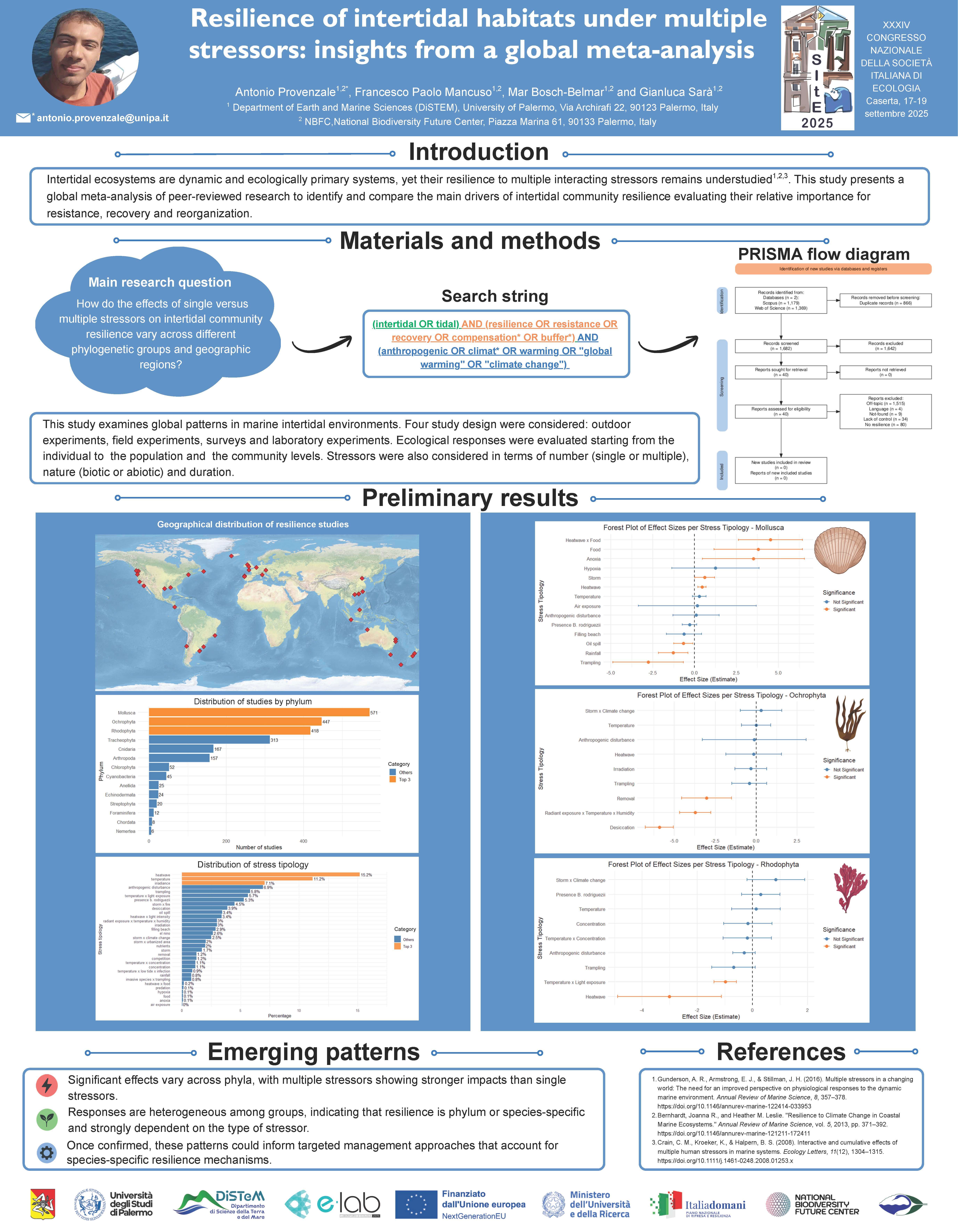
Intertidal ecosystems are among the most dynamic and ecologically significant environments on the planet, providing essential services and serving as sentinel systems for detecting environmental change. Despite that, their resilience to the increasing biotic and abiotic stressors remains poorly explored. The cumulative and interactive effects of multiple pressures, such as pollution, resource exploitation, habitat modification, and climate change, on communitylevel responses require urgent synthesis, as previous research has frequently concentrated on individual stressors. This study proposes a global meta-analysis, based on a comprehensive review and statistical synthesis of peer reviewed research from diverse geographical regions, to identify, quantify, and compare the primary drivers shaping intertidal community resilience and to assess the relative importance of these stressors in determining its three components - resistance to change, recovery capacity, and reorganization potential. A review of ~90 case studies on intertidal ecosystems shows that 20–25 (25–30%) explicitly address resilience, often in relation to multiple stressors, marine heatwaves, and anthropogenic disturbances. Extreme heat and marine heatwaves are the most cited stressors (47 studies), followed by cumulative stressors (15), physical disturbances for example storms and low-tide exposure (15+), ocean acidification (11), and anthropogenic impacts such as trampling (8).The results will fill a critical knowledge gap by advancing our understanding of how multiple drivers interactively affect intertidal community stability and recovery potential. Ultimately, this synthesis will support evidence-based recommendations for coastal ecosystem management and conservation by identifying which stressors most strongly compromise resilience and highlighting where mitigation and intervention efforts could be most effective. This research will contribute to the development of more adaptive and integrated strategies to protect intertidal biodiversity and ecosystems in the context of global change

Download

Site 2025

Trawling disturbance in soft-sediment ecosystems: tracing carbon sequestration

Francesco Pellerito

Sandy and muddy seabed ecosystems are key components of marine carbon cycling, contributing to climate regulation through carbon storage and nutrient flux modulation. However,…
Read more

Site 2025

Trawling disturbance in soft-sediment ecosystems: tracing carbon sequestration

Francesco Pellerito

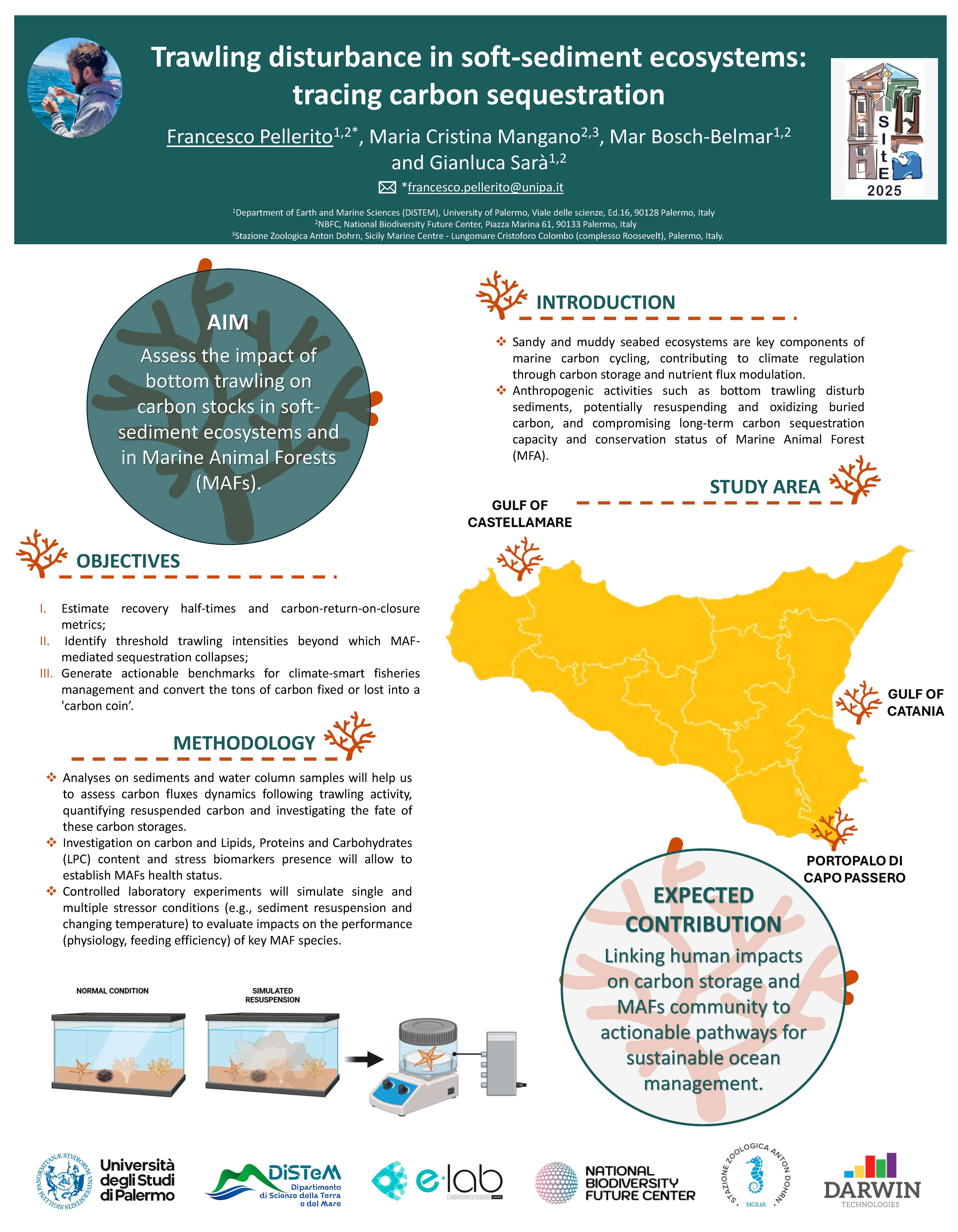
Sandy and muddy seabed ecosystems are key components of marine carbon cycling, contributing to climate regulation through carbon storage and nutrient flux modulation. However, anthropogenic activities such as bottom trawling disturb sediments, potentially resuspending and oxidizing buried carbon, and compromising long-term carbon sequestration capacity. This project investigates the impact of bottom trawling on carbon stocks in soft-sediment ecosystems, focusing on sedimentary and biogeochemical alterations and the responses of benthic communities, particularly Marine Animal Forests (MAFs)—complex habitats formed by habitat-forming suspension feeders. Their structural complexity makes them both key components in carbon sequestration processes and especially vulnerable to physical disturbance from trawling, making their inclusion critical to understanding ecosystem-scale impacts. Sediment and water samples will be collected before and after experimental trawling in three Sicilian coastal areas with different fishing pressures: the Gulf of Castellammare, the Gulf of Catania, and the area of Capo Passero. Analyses on sediments and water samples will assess carbon fluxes following trawling, quantify resuspended carbon, and investigate its fate. Controlled laboratory experiments will simulate sediment resuspension to evaluate impacts on the physiology, feeding efficiency, and health of key MAF species. By coupling ecosystem-level fluxes with organism-level mechanisms, the project will: (i) estimate recovery half-times and carbon-return-on-closure metrics; (ii) identify threshold trawling intensities beyond which MAF-mediated sequestration collapses; (iii) mint a ‘carbon coin’, quantifying the tons of carbon fixed or lost and translating them into present-day market value to expose the hidden economic cost of trawl-induced leakage and (iv) generate actionable benchmarks for climate-smart fisheries management. This framework finally connects seabed disturbance, biological engineering and carbon-climate-economy feedback into a single, policy-ready toolbox for one of the planet’s most intensively trawled seas.

Download

Site 2025

Experimental seagrass restoration using facilitative interactions and functional metrics

Giulia Lucido

Seagrass meadows are key ecosystems in the Mediterranean coastal areas supporting rich biodiversity and providing numerous ecosystem services. However, these ecosystems are…
Read more

Site 2025

Experimental seagrass restoration using facilitative interactions and functional metrics

Giulia Lucido

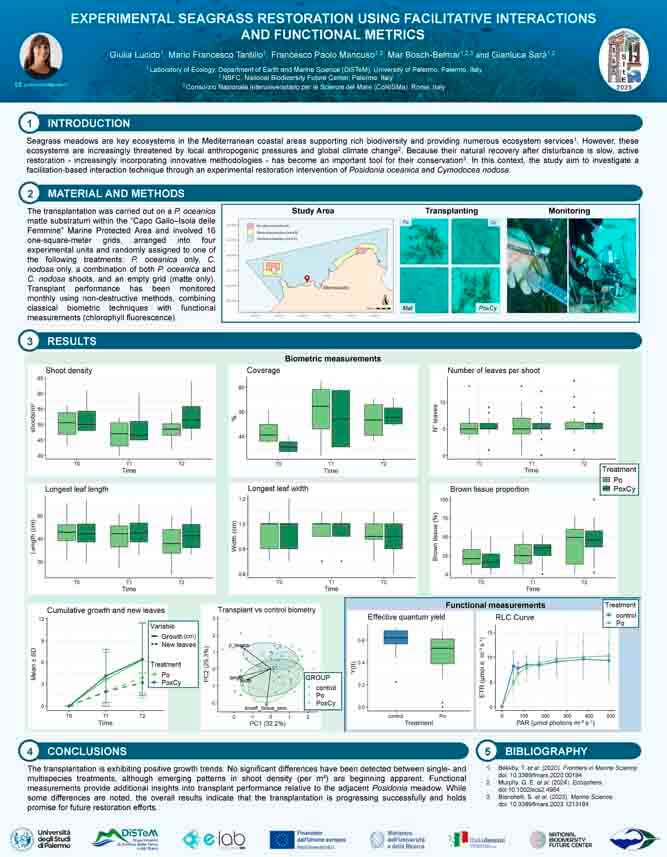
Seagrass meadows are key ecosystems in the Mediterranean coastal areas supporting rich biodiversity and providing numerous ecosystem services. However, these ecosystems are increasingly threatened by local anthropogenic pressures and climate change. Because their natural recovery after disturbance is slow, active restoration – increasingly incorporating innovative methodologies - has become an important tool for their conservation. In this context, we investigated a facilitation-based interaction technique through an experimental restoration intervention within the “Capo Gallo–Isola delle Femmine” Marine Protected Area. The transplantation was carried out on a Posidonia oceanica matte substratum and involved 16 one-square-meter grids, arranged into four experimental units and randomly assigned to one of the following treatments: Cymodocea nodosa only, P. oceanica only, a combination of both P. oceanica and C. nodosa shoots, and a control grid (matte only). Transplant performance is being monitored monthly using non-destructive methods, combining classical biometric techniques with metabolic measurements. This experiment represents an innovative approach to the restoration of P. oceanica meadows, leveraging the potential facilitative role of C. nodosa to enhance restoration effectiveness through interspecific interactions. In addition, traditional monitoring is complemented by metabolic measurements at both individual and community levels, providing functional performance metrics. Although results are still under evaluation, this study offers a potentially replicable and methodologically advanced model for future restoration efforts, aiming to strengthen the resilience of Mediterranean coastal ecosystems.

Download

Site 2025

Experimental assessment of warming effects on vermetid reef metabolism along a complexity gradient

Laura Caviglia

Coastal marine ecosystems and the services they provide are increasingly threatened by climate change. The Mediterranean basin, recognized as a climate change hotspot, is…
Read more

Site 2025

Experimental assessment of warming effects on vermetid reef metabolism along a complexity gradient

Laura Caviglia

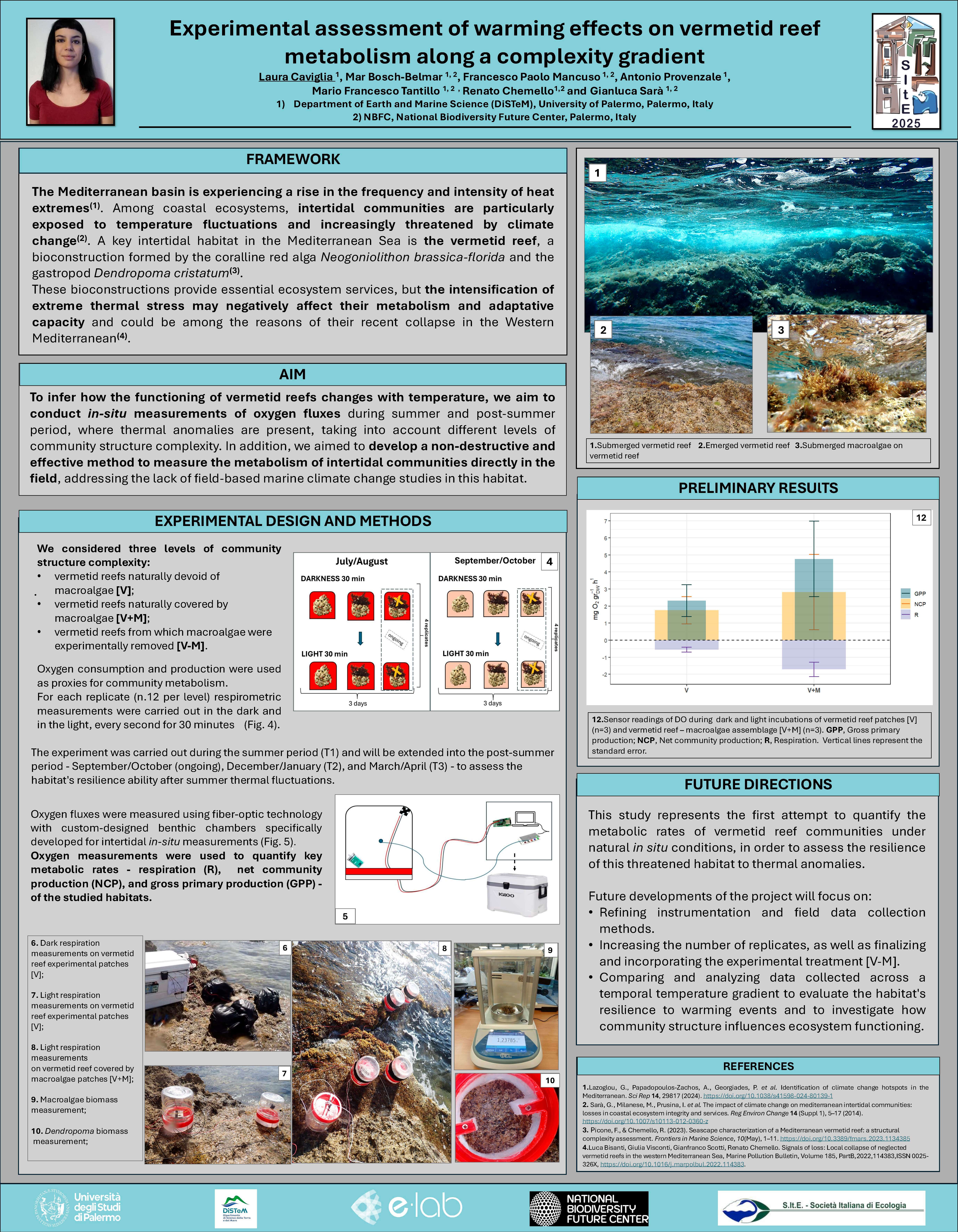
Coastal marine ecosystems and the services they provide are increasingly threatened by climate change. The Mediterranean basin, recognized as a climate change hotspot, is experiencing a rise in the frequency and intensity of heat extremes. Among coastal ecosystems, intertidal communities are particularly exposed to temperature fluctuations. Although they are adapted to such variability through physiological plasticity, the intensification of extreme thermal stress may negatively affect their metabolism and adaptative capacity. A key intertidal habitat in the Mediterranean Sea is the vermetid reef, a bioconstruction formed by the coralline red alga Neogoniolithon brassica-florida and the gastropod Dendropoma cristatum. These bioconstructions provide essential ecosystem services, including coastal protection and biodiversity support, but are endangered throughout the basin, have already collapse in the western Mediterranean, and remain among the most poorly studied marine habitats. This study investigates the metabolic response of the vermetid reef habitat to thermal stress, considering varying levels of community complexity: vermetid reefs naturally covered by brown macroalgae, reefs naturally free of macroalgae and reefs where macroalgae were experimentally removed. Oxygen fluxes were measured as a proxy for community metabolism, using ad-hoc developed intertidal benthic chambers. The experiment was carried out on reefs located in northern Sicily and repeated different times throughout 2025, to obtain measurements before, during, and after the warmest period of the year for this area. We hypothesized that warming affects the metabolism of the vermetid reef, but that this effect is buffered by the associated biodiversity, particularly the presence of canopy-forming brown algae. This experiment defines a non-destructive method to measure the metabolism of intertidal communities directly in the field, addressing the lack of field-based marine climate change studies, especially on vermetid reefs. Understanding how different levels of structural complexity mediated the response to thermal stress is crucial for developing conservation strategies targeting this endangered ecosystem.

Download

Site 2025

Conservation challenges posed by the invasive blue crab Callinectes sapidus in Sicilian coastal wetlands: insights from the Stagnone di Marsala lagoon and the Trapani and Paceco salt pans

Nicoletta Marsiglia

Mediterranean coastal wetlands, including lagoons and saltmarshes, are critical biodiversity hotspots and provide essential ecosystem services such as nursery habitats, nutrient…

Read more

Site 2025

Conservation challenges posed by the invasive blue crab Callinectes sapidus in Sicilian coastal wetlands: insights from the Stagnone di Marsala lagoon and the Trapani and Paceco salt pans

Nicoletta Marsiglia

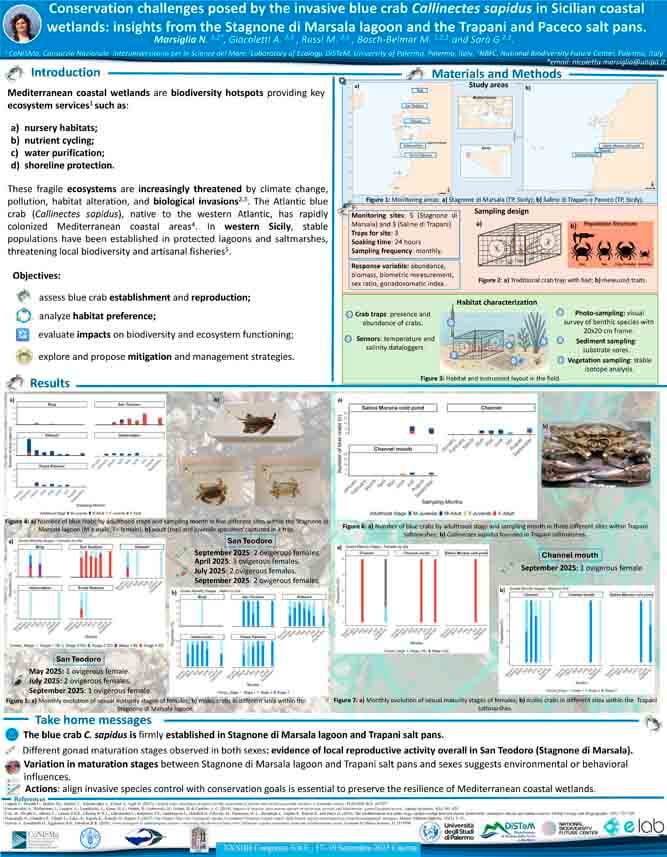
Mediterranean coastal wetlands, including lagoons and saltmarshes, are critical biodiversity hotspots and provide essential ecosystem services such as nursery habitats, nutrient cycling, and water filtration. These fragile ecosystems are increasingly threatened by climate change, anthropogenic pressures, and biological invasions. The blue crab Callinectes sapidus, a decapod crustacean native to the western Atlantic, has recently established stable populations in several Mediterranean regions, including the Stagnone di Marsala lagoon and the Trapani saltmarshes (western Sicily, Italy). This species displays high ecological plasticity and reproductive capacity, enabling rapid expansion in brackish and shallow environments, where it may outcompete native communities. Within the framework of FAO-GFCM project, we conducted a multidisciplinary study combining monitoring of some ecological variables, habitat characterization and a systematic literature review to assess the potential impacts of C. sapidus on local biodiversity and ecosystem functioning. Our results confirmed a stable and reproducing population, with a marked presence of ovigerous females and juvenile stages, particularly in spring, indicating active recruitment and successful settlement. Habitat analyses revealed the blue crab’s preference for structurally complex and productive environments, such as vegetated lagoon areas, where it may exert top-down pressure on native invertebrate communities and disrupt key ecological processes. Given the ecological relevance and protected status of these sites (Natura 2000), the spread of C. sapidus poses a tangible threat to long-term conservation goals and the provision of vital ecosystem services. Moreover, its presence may compromise traditional artisanal fisheries and the ecological balance of these transitional environments. We highlight the importance of adopting integrated ecosystem management strategies that combine early detection, continuous monitoring, stakeholder engagement and the exploration of controlled commercial exploitation as a complementary mitigation tool. Our study underscores the need to align invasive species control with broader conservation objectives, ensuring the ecological integrity and resilience of Mediterranean coastal wetlands in the face of ongoing global change.

Download

Testo completo